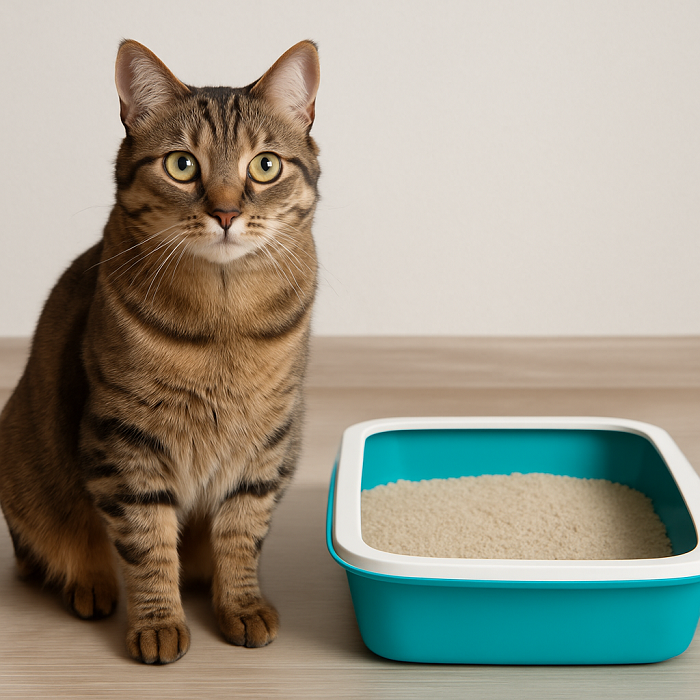
✍️ Article Content:
Bringing a cat home for the first time? One of the first things you’ll want to do is teach them where to “go.”
Litter training is usually simple, but a few key steps can make all the difference between a clean home and a stinky one.
Here’s how to litter train your cat the right way — step-by-step.
🧼 Step 1: Choose the Right Litter Box
Start with a low-sided box for kittens or a larger, uncovered box for adult cats.
Avoid automatic boxes during training — they can scare cats.
Pro Tip: One litter box per cat + one extra. If you have 2 cats, you need 3 boxes!
🪨 Step 2: Pick the Right Litter
Most cats prefer unscented, clumping litter.
Avoid heavily scented or pellet-style litter at first — it may confuse or deter them.
Try different textures if your cat seems picky. Some brands offer trial packs.
🏠 Step 3: Place the Box in a Quiet Spot
Location matters!
Put the litter box in a private, low-traffic area — but not too far from where they spend most time.
Avoid noisy places like laundry rooms or next to appliances.
🐾 Step 4: Show Them the Box
Gently place your kitten/cat in the box after meals, play, or naps.
Let them sniff and explore.
If they start scratching around — that’s a great sign!
🔁 Step 5: Keep a Routine
Consistency helps.
Put them in the litter box at regular times, especially after eating or waking up.
Clean any “accidents” thoroughly to remove scent — use enzyme cleaners, not ammonia-based ones.
🧽 Step 6: Clean the Box Daily
Scoop at least once a day.
Cats are clean creatures — if the box is dirty, they might go elsewhere.
Wash the entire box weekly using mild soap and warm water.
😿 Step 7: Watch for Problems
If your cat suddenly stops using the box, it could be due to:
- Stress or changes in the environment
- Medical issues (UTI, constipation)
- Dirty box or wrong litter
Always rule out health problems with a vet if it persists.
💡 Bonus Tips:
- Never punish your cat for accidents — it creates fear. Redirect gently instead.
- Don’t move the litter box suddenly. If needed, shift it gradually over several days.
- Older cats can be trained too! It just takes more patience and observation.
🐱 Final Thoughts
Litter training your cat is usually straightforward — especially with a little patience and the right setup. Start with the basics, observe their habits, and keep things clean and positive.
Before you know it, your furry friend will be a litter box pro.
📩 Want More Cat Tips?
Subscribe to PetWellCentral for weekly insights on cat care, training, and behavior.